








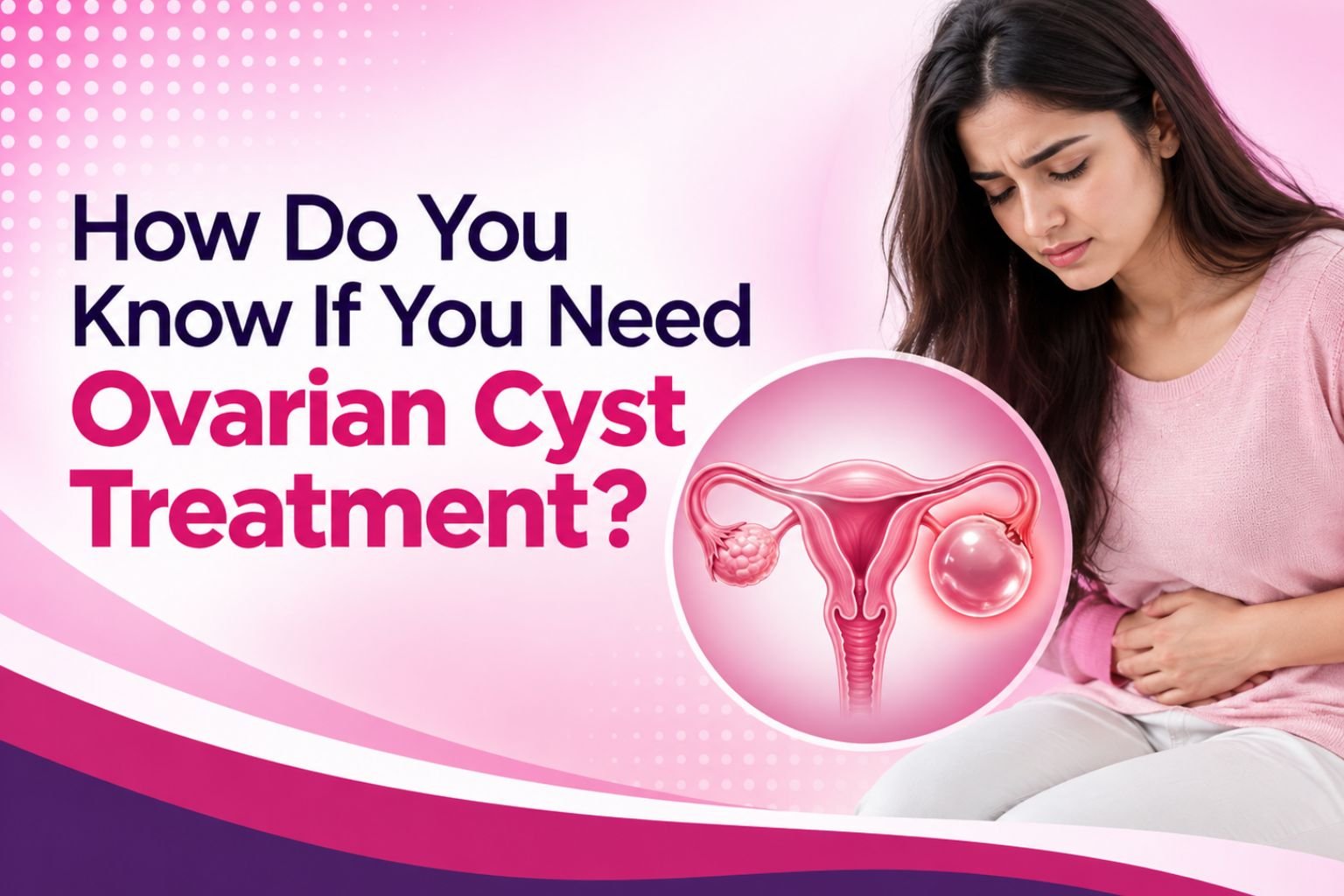
How Do You Know If You Need Ovarian Cyst Treatment?
Ovarian cysts are fluid-filled sacs that develop on or inside an ovary. They are relatively common, particularly during the reproductive years, and many ovarian cysts are harmless and disappear on their own without treatment.
However, some cysts may require medical monitoring or treatment depending on their size, appearance, symptoms, type, and whether they change over time.
So, how do you know if you need ovarian cyst treatment?
The answer depends on several factors. Persistent or severe symptoms, a cyst that is growing or unusually large, concerning findings on imaging, or complications such as twisting or rupture may require prompt medical attention.
Dr Neelima Kulshrestha can evaluate your symptoms and medical history and recommend an appropriate approach based on your individual condition.
What Is an Ovarian Cyst?
An ovarian cyst is a sac that develops in or on an ovary and may contain fluid or other material.
Many cysts develop as part of the normal menstrual cycle. These are often called functional cysts and commonly resolve without specific treatment.
Other cysts can develop for different reasons and may require closer evaluation.
Examples include:
- Functional ovarian cysts
- Endometriomas
- Dermoid cysts
- Cystadenomas
- Ovarian cysts associated with certain hormonal conditions
Not every ovarian cyst requires treatment. The first step is determining what type of cyst you have and whether it is causing any problems.
When Does an Ovarian Cyst Need Treatment?
The presence of an ovarian cyst does not automatically mean you need surgery or medication.
Your gynecologist may recommend observation when a cyst is small, appears benign, and is not causing significant symptoms.
Treatment may be considered when:
- The cyst causes persistent or significant symptoms
- The cyst is large
- The cyst continues to grow
- The cyst does not disappear over time
- Imaging shows features that require further evaluation
- The cyst is associated with complications
- The cyst is suspected to be related to another gynecological condition
- There is concern about malignancy
The appropriate treatment depends on your individual circumstances.
What Symptoms Can an Ovarian Cyst Cause?
Some ovarian cysts cause no symptoms and are discovered during a routine pelvic examination or ultrasound.
When symptoms occur, they may include:
Pelvic Pain
You may experience dull, aching, or sharp pain in the lower abdomen or pelvis. The pain may occur on one side or vary in intensity.
Abdominal Fullness or Pressure
A larger cyst may create a sensation of pressure, heaviness, or fullness in the lower abdomen.
Bloating
Some women may experience abdominal bloating or an uncomfortable feeling of fullness.
Pain During Sexual Intercourse
Certain ovarian cysts may cause discomfort during intercourse.
Changes in Menstrual Periods
Some cysts or underlying hormonal conditions may be associated with changes in menstrual bleeding or cycle patterns.
Frequent Urination or Bowel Pressure
A larger cyst may put pressure on nearby structures, potentially causing urinary or bowel-related symptoms.
However, these symptoms can have many possible causes. They do not necessarily mean that an ovarian cyst is responsible.
What Are the Warning Signs That Need Urgent Medical Attention?
Some symptoms associated with ovarian cysts can indicate a complication and should not be ignored.
Seek urgent medical attention if you experience:
- Sudden and severe pelvic or abdominal pain
- Severe pain accompanied by vomiting
- Fainting or significant weakness
- Dizziness with severe abdominal pain
- Fever with significant pelvic pain
- Heavy or unusual bleeding accompanied by severe symptoms
These symptoms can occur with complications such as ovarian torsion or cyst rupture, but other serious conditions can cause similar symptoms.
Do not try to diagnose the cause yourself. Prompt medical evaluation is important.
How Are Ovarian Cysts Diagnosed?
If your doctor suspects an ovarian cyst, the evaluation may include several steps.
1. Medical History
Your gynecologist may ask about:
- Menstrual cycle patterns
- Pelvic or abdominal pain
- Previous ovarian cysts
- Pregnancy history
- Medications
- Previous gynecological conditions
- Other symptoms
This information helps provide context for your symptoms.
2. Physical Examination
Depending on your symptoms and circumstances, a pelvic examination may be recommended.
3. Ultrasound
Ultrasound is commonly used to evaluate ovarian cysts.
It can provide information about:
- The size of the cyst
- Its location
- Whether it appears fluid-filled or contains solid components
- Its overall appearance
- Changes over time
Your doctor may recommend a follow-up ultrasound when monitoring is appropriate.
4. Blood Tests or Other Investigations
Depending on your age, symptoms, ultrasound findings, and clinical history, your doctor may recommend additional tests.
Not every woman with an ovarian cyst requires blood tests.
What Are the Treatment Options for Ovarian Cysts?
Treatment depends on the type of cyst, symptoms, size, ultrasound appearance, age, reproductive goals, and other individual factors.
Observation and Follow-Up
Many ovarian cysts can be monitored without immediate treatment.
Your doctor may recommend a repeat ultrasound after a specific period to determine whether the cyst has changed or disappeared.
This approach is sometimes called watchful waiting or observation.
Pain Management
If an ovarian cyst causes mild discomfort, your doctor may recommend appropriate pain management depending on your health and medical history.
Do not take medication regularly without discussing it with your healthcare professional, particularly if you have other medical conditions or take other medicines.
Hormonal Medication
Hormonal contraceptives may sometimes be recommended for specific patients to help prevent new functional ovarian cysts.
However, they do not necessarily make an existing cyst disappear.
Your gynecologist can determine whether hormonal treatment is appropriate for you.
Surgery
Surgery may be considered when a cyst is large, persistent, symptomatic, complicated, or has concerning features.
The type of surgery depends on the cyst and your individual circumstances.
Possible approaches can include minimally invasive surgery such as laparoscopy or, in selected situations, a larger surgical procedure.
The objective is to treat the problem while considering the patient’s overall health and, where relevant, future fertility.
Does Every Ovarian Cyst Require Surgery?
No.
This is one of the most important things to understand about ovarian cysts.
Many ovarian cysts are managed through observation rather than surgery.
Surgery may be recommended when there is a specific clinical reason, such as persistent symptoms, a large or growing cyst, complications, or concerning imaging findings.
Your doctor should explain why surgery is being considered and discuss appropriate alternatives when available.
Can an Ovarian Cyst Go Away on Its Own?
Yes, some ovarian cysts can disappear without treatment.
Functional cysts related to the menstrual cycle often resolve naturally over time.
However, not every cyst behaves in the same way. Some types may persist and require monitoring or treatment.
If your doctor recommends follow-up imaging, attending the appointment is important even if your symptoms improve.
Does the Size of an Ovarian Cyst Matter?
Cyst size is one factor doctors consider, but it is not the only factor.
Your gynecologist may also evaluate:
- The appearance of the cyst
- Whether it is changing in size
- Your age
- Your symptoms
- Whether you are pregnant or trying to conceive
- Whether the cyst is simple or complex
- Other findings on ultrasound
Therefore, a large cyst is not automatically dangerous, and a smaller cyst is not automatically harmless.
A complete clinical assessment is more useful than focusing on size alone.
Can Ovarian Cysts Affect Fertility?
Many ovarian cysts do not affect fertility.
However, certain conditions associated with ovarian cysts, such as endometriosis, may affect fertility. Some ovarian conditions can also interfere with normal ovulation.
Treatment decisions should therefore take reproductive goals into account, especially for women who are planning a pregnancy.
If you are trying to conceive and have been diagnosed with an ovarian cyst, discuss your fertility plans with your gynecologist before choosing treatment.
Ovarian Cyst Treatment and Pregnancy
Ovarian cysts can sometimes be found during pregnancy.
The approach depends on factors such as:
- The cyst’s size
- Its appearance
- Symptoms
- Stage of pregnancy
- Whether complications are present
Many cysts found during pregnancy can be monitored, while others may require further evaluation or treatment.
If you are pregnant and experience severe abdominal or pelvic pain, seek prompt medical attention.
What Can Happen If an Ovarian Cyst Is Left Untreated?
Not every untreated ovarian cyst causes a problem. Some disappear naturally.
However, a cyst that requires treatment or monitoring should not simply be ignored.
Depending on the type and circumstances, an ovarian cyst can sometimes:
- Continue to grow
- Cause persistent pain or pressure
- Rupture
- Cause internal bleeding
- Twist the ovary, known as ovarian torsion
- Require surgical treatment
Regular follow-up helps your doctor determine whether the cyst is resolving or requires further management.
How Is the Right Treatment Decided?
Your gynecologist may consider several factors before recommending treatment.
Your Symptoms
Persistent or severe symptoms may influence the treatment decision.
Your Age
The significance of an ovarian cyst can vary depending on whether you are premenopausal or postmenopausal.
Cyst Characteristics
The appearance of the cyst on ultrasound or other imaging is important.
Cyst Size and Changes
Your doctor may monitor whether the cyst is growing, shrinking, or remaining stable.
Your Reproductive Plans
If you want to become pregnant, treatment planning should take fertility preservation into consideration.
Your Overall Health
Existing health conditions and medications may affect which treatment options are appropriate.
Ovarian Cyst Treatment in Sector 47 Gurgaon
If you are searching for ovarian cyst treatment in Sector 47 Gurgaon, a gynecological consultation can help determine whether your ovarian cyst requires treatment, monitoring, or no immediate intervention.
At Dr Neelima Kulshrestha, the evaluation can be tailored to your symptoms, medical history, ultrasound findings, and reproductive needs.
Rather than assuming that every ovarian cyst requires surgery, a proper assessment helps determine the most appropriate approach for your individual situation.
Ovarian Cyst Treatment in CloudNine Hospital, Gurgaon
Patients looking for ovarian cyst treatment in CloudNine Hospital, Gurgaon may benefit from a detailed gynecological assessment when they have symptoms or have been diagnosed with an ovarian cyst.
Dr Neelima Kulshrestha can evaluate the clinical and imaging findings and discuss appropriate management options based on the individual case.
The treatment plan may involve observation, follow-up imaging, medication for selected symptoms or conditions, or surgery when clinically indicated.
How Can You Prepare for an Ovarian Cyst Consultation?
Before your appointment, it can be helpful to note:
- When your symptoms started
- Where you experience pain
- Whether pain occurs during your period
- Changes in your menstrual cycle
- Previous ovarian cyst diagnoses
- Previous ultrasound reports
- Current medications
- Previous gynecological procedures
- Whether you are planning a pregnancy
You may also want to prepare questions about your diagnosis and treatment options.
Questions to Ask Your Gynecologist
Consider asking:
- What type of ovarian cyst do I have?
- How large is the cyst?
- Does the ultrasound appearance look reassuring?
- Does the cyst require treatment or monitoring?
- When should I have another ultrasound?
- What symptoms should make me seek urgent care?
- Could the cyst affect my fertility?
- Are there non-surgical treatment options?
- If surgery is recommended, why is it necessary?
- What should I expect during recovery?
Clear communication can help you understand your options and participate in decisions about your care.
Frequently Asked Questions About Ovarian Cyst Treatment
How do I know if I need ovarian cyst treatment?
Treatment may be considered if an ovarian cyst causes significant or persistent symptoms, grows, remains present, has concerning imaging features, or causes complications. Some cysts require only observation.
Can ovarian cysts disappear without treatment?
Yes. Many functional ovarian cysts resolve naturally over time. However, some types of cysts persist and require monitoring or treatment.
Is surgery always required for an ovarian cyst?
No. Many ovarian cysts do not require surgery. Surgery is generally considered when there is a specific clinical reason, such as persistent symptoms, complications, significant growth, or concerning findings.
Can an ovarian cyst cause severe pain?
Yes. Some ovarian cysts can cause pelvic or abdominal pain. Sudden, severe pain—especially with vomiting, dizziness, fainting, or fever—requires urgent medical evaluation.
Can ovarian cysts affect fertility?
Many do not. However, certain conditions associated with ovarian cysts, including endometriosis, may affect fertility. Your gynecologist can discuss your individual situation.
How are ovarian cysts treated without surgery?
Depending on the type of cyst and symptoms, management may involve observation and follow-up imaging. Medication may be used for certain symptoms or underlying hormonal conditions when appropriate.
How long does ovarian cyst treatment take?
There is no single treatment timeline. Some cysts resolve naturally over several menstrual cycles, while others may require longer monitoring or surgical treatment.
Can an ovarian cyst become cancerous?
Most ovarian cysts are benign, but certain cystic or complex ovarian masses may require further evaluation. Risk varies according to factors such as age, ultrasound appearance, and other clinical findings.
When should I see a gynecologist for an ovarian cyst?
Arrange a medical evaluation if you have persistent pelvic pain, unusual menstrual changes, abdominal swelling or pressure, or have been told that you have an ovarian cyst requiring follow-up.
Seek urgent medical attention for sudden severe abdominal or pelvic pain, particularly when accompanied by vomiting, fainting, dizziness, or fever.
Final Thoughts
Finding out that you have an ovarian cyst can understandably cause concern. However, an ovarian cyst does not automatically mean that you need medication or surgery.
Many cysts are harmless and resolve naturally, while others require monitoring or treatment. The right approach depends on the type, size, appearance, symptoms, age, reproductive goals, and overall health of the patient.
If you are looking for ovarian cyst treatment in Sector 47 Gurgaon, consulting Dr Neelima Kulshrestha can help you understand your diagnosis and available management options.
If you have persistent or severe symptoms, do not rely on online information alone. A gynecological examination and appropriate imaging are important for determining the cause and deciding whether treatment is necessary.