








What Type of Surgery Is Used for Permanent Birth Control?
Choosing a permanent method of birth control is an important decision for individuals or couples who are certain that they do not want to have biological children in the future. Unlike temporary contraceptive methods, permanent birth control is intended to provide long-term contraception without requiring daily pills, devices, or repeated injections.
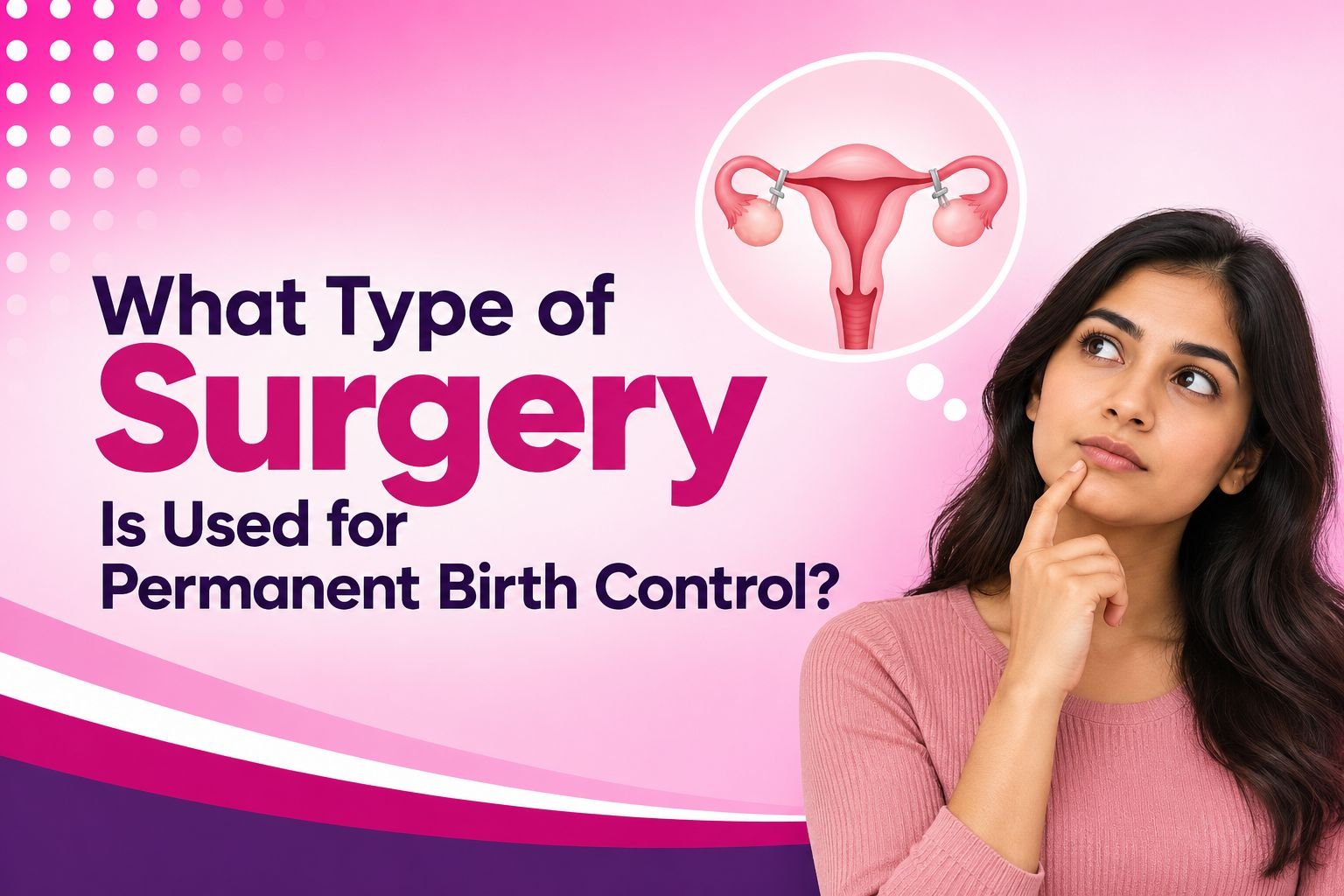
For women, the most commonly used surgical method of permanent birth control is tubal sterilization, also known as tubectomy or female sterilization. The procedure involves blocking, cutting, sealing, or removing the fallopian tubes so that sperm cannot reach an egg.
If you are looking for permanent birth control surgery in Sector 47 Gurgaon, consulting an experienced gynaecologist such as Dr. Neelima Kulshrestha can help you understand whether tubal sterilization is appropriate for you and which surgical approach may be suitable.
What Is Permanent Birth Control Surgery?
Permanent birth control surgery is a contraceptive procedure designed to prevent pregnancy permanently. In women, this usually involves operating on the fallopian tubes.
Normally, an egg released from the ovary travels through a fallopian tube. Fertilization can occur when sperm meets the egg in the fallopian tube. During tubal sterilization, the fallopian tubes are blocked, cut, sealed, or sometimes removed. This prevents sperm from reaching the egg and significantly reduces the possibility of pregnancy.
Female sterilization generally does not affect the ovaries or stop the menstrual cycle. A woman will usually continue to ovulate and have periods after the procedure.
What Type of Surgery Is Used for Permanent Birth Control in Women?
The primary surgical option is tubal sterilization, commonly called tubectomy.
There are several techniques a gynaecologist may consider depending on the patient’s medical history, previous surgeries, anatomy, and the surgeon’s recommendation.
1. Laparoscopic Tubal Sterilization
Laparoscopic sterilization is a minimally invasive approach. The surgeon makes small abdominal incisions and uses a laparoscope, a thin camera-equipped instrument, to access the fallopian tubes.
The tubes may be:
- Blocked using clips or rings
- Cut and sealed
- Divided using an appropriate surgical technique
- Removed completely in selected cases
Because laparoscopic surgery uses small incisions, recovery is generally faster than with a larger abdominal incision.
2. Tubal Ligation
Tubal ligation refers to surgical methods used to block or interrupt the fallopian tubes. Depending on the technique, the tubes may be cut, tied, sealed, clipped, or otherwise interrupted.
The specific method is selected by the gynaecologist based on the patient’s circumstances.
3. Bilateral Salpingectomy
Bilateral salpingectomy involves removing both fallopian tubes rather than simply blocking them.
In some patients, complete removal of the fallopian tubes may be considered as an option for permanent contraception. It may also have potential benefits related to reducing the risk of certain ovarian cancers, although suitability depends on individual circumstances.
Your gynaecologist can explain whether bilateral salpingectomy is appropriate for you.
Is Tubectomy Really Permanent?
Yes. Female sterilization is considered a permanent method of contraception.
Although reversal procedures may sometimes be technically possible after certain sterilization methods, reversal is not guaranteed to restore fertility. Success can depend on factors such as:
- The sterilization technique originally used
- The remaining length and condition of the fallopian tubes
- Age
- Ovarian reserve and fertility factors
- The fertility of the partner
- The expertise available for tubal reconstruction
For this reason, sterilization should be considered only when you are confident that you do not want a future pregnancy.
Who May Consider Permanent Birth Control Surgery?
Permanent contraception may be considered by adults who have made a well-informed and voluntary decision that they do not want future pregnancies.
A woman may discuss permanent sterilization with her gynaecologist if:
- Her family is complete
- She does not want to use temporary contraception
- Pregnancy could pose significant health concerns
- She and her partner have carefully considered their reproductive plans
- She understands that sterilization is intended to be permanent
The decision should be personal and voluntary. A healthcare professional can provide counselling and explain alternatives without pressuring you toward any particular option.
What Happens During Tubectomy Surgery?
The exact process depends on the surgical technique.
For laparoscopic sterilization, the procedure commonly involves:
Step 1: Preoperative assessment
Your doctor reviews your medical history, previous surgeries, medications, allergies, pregnancy status, and overall health.
Step 2: Anaesthesia
The procedure is generally performed under anaesthesia so that you do not experience pain during the operation.
Step 3: Small abdominal incisions
The surgeon makes small openings in the abdomen to introduce the laparoscope and surgical instruments.
Step 4: Fallopian tube treatment
The fallopian tubes are blocked, divided, sealed, or removed depending on the selected technique.
Step 5: Closure and recovery
The instruments are removed and the small incisions are closed. You are then monitored during recovery from anaesthesia.
The exact duration and whether you can return home the same day depend on the procedure and your individual medical condition.
Does Permanent Birth Control Affect Periods?
Tubal sterilization itself generally does not stop ovulation or menstruation because the ovaries remain functional.
Therefore, most women continue to have menstrual periods after sterilization.
However, changes in menstrual bleeding after the procedure may sometimes be related to stopping a hormonal contraceptive method that was previously being used. Your doctor can help determine the likely cause if your periods change.
Does Tubectomy Affect Hormones?
Generally, tubal sterilization does not directly affect ovarian hormone production because the ovaries are not removed.
The procedure is focused on the fallopian tubes, which are involved in transporting the egg rather than producing reproductive hormones.
If both ovaries are removed for another medical reason, that is a different procedure called oophorectomy and should not be confused with tubal sterilization.
Is Permanent Birth Control Surgery Safe?
Tubal sterilization is generally considered a safe and effective surgical method when performed in an appropriate clinical setting by a qualified healthcare professional.
However, like any surgical procedure, it can involve risks. Depending on the technique and individual circumstances, possible complications may include:
- Bleeding
- Infection
- Pain or discomfort
- Anaesthesia-related complications
- Injury to nearby organs
- Reactions to medications
- Rare surgical complications
- Pregnancy despite sterilization
Your gynaecologist should discuss the potential benefits and risks with you before surgery.
Can Pregnancy Still Occur After Tubectomy?
Tubal sterilization is highly effective, but no contraceptive method is completely guaranteed to prevent pregnancy.
In rare cases, pregnancy can occur after sterilization. If pregnancy occurs following tubal sterilization, there is a higher concern for an ectopic pregnancy, in which the pregnancy develops outside the uterus, commonly within a fallopian tube.
If you have undergone sterilization and experience a missed period, positive pregnancy test, unusual abdominal pain, shoulder pain, dizziness, or vaginal bleeding, seek medical attention promptly.
How Long Does Recovery Take After Tubectomy?
Recovery varies depending on the surgical approach and your overall health.
After laparoscopic surgery, some women may experience:
- Mild abdominal discomfort
- Bloating
- Shoulder-tip discomfort caused by the gas used during laparoscopy
- Tiredness
- Mild soreness around the incision sites
Your doctor will provide specific instructions regarding bathing, physical activity, lifting, sexual activity, wound care, and returning to work.
Do not assume that a quick recovery means that every activity is immediately safe. Follow your surgeon’s individual instructions.
Is Tubectomy Better Than Temporary Contraception?
There is no single contraceptive method that is best for everyone.
Permanent sterilization may be suitable for someone who is certain that they do not want future pregnancies. However, someone who is uncertain may prefer a reversible option.
Temporary and reversible alternatives include:
- Intrauterine devices
- Hormonal contraceptive methods
- Contraceptive implants where available
- Oral contraceptive pills
- Condoms
- Other clinician-recommended contraceptive methods
Discussing your reproductive goals with a gynaecologist can help you compare effectiveness, convenience, side effects, reversibility, and personal preferences.
What About Male Permanent Birth Control?
Permanent contraception is not limited to women.
For men, the permanent surgical contraceptive procedure is called a vasectomy. During vasectomy, the tubes that carry sperm from the testicles are cut, sealed, or blocked.
Vasectomy is generally a simpler procedure than female sterilization and does not involve operating on the abdomen. However, it is also intended to be permanent and requires appropriate follow-up after the procedure.
Couples can discuss both options with their respective healthcare professionals before deciding which approach is more suitable.
Is Tubectomy Reversible?
Tubectomy should be considered permanent.
Some women may investigate tubal reversal surgery, but reversal is not guaranteed to restore fertility. Furthermore, reversal may not be possible depending on the original sterilization technique and the condition of the fallopian tubes.
If there is any uncertainty about future pregnancy, it is important to discuss reversible contraceptive options before choosing sterilization.
Frequently Asked Questions
What is the most common surgery for permanent birth control in women?
The most common surgical approach is tubal sterilization, commonly known as tubectomy or tubal ligation. The fallopian tubes are blocked, cut, sealed, or removed to prevent sperm from reaching the egg.
Is permanent birth control surgery painful?
The procedure is performed under anaesthesia, so pain is generally controlled during surgery. Some abdominal discomfort, soreness, bloating, or fatigue can occur during recovery.
Will I get my periods after tubectomy?
In most cases, yes. Tubectomy does not usually stop ovulation or menstruation because the ovaries remain in place.
Can tubectomy cause infertility?
Tubectomy is specifically intended to cause permanent contraception by preventing the egg and sperm from meeting. It does not usually damage ovarian function. However, it prevents natural conception through the fallopian tubes.
How soon can I return to normal activities after laparoscopic sterilization?
Recovery varies from person to person. Your surgeon will advise when you can return to work, exercise, lifting, and sexual activity based on the procedure and your recovery.
Is sterilization 100% effective?
No contraceptive method can be considered absolutely 100% effective. Female sterilization is highly effective, but rare failures can occur.
Can tubectomy protect against sexually transmitted infections?
No. Tubal sterilization does not protect against sexually transmitted infections. Condoms may be recommended when STI protection is required.
What should I consider before choosing permanent contraception?
You should consider whether you are certain that you do not want future pregnancies, your medical history, available alternatives, potential surgical risks, and the permanent nature of the decision. A consultation with a qualified gynaecologist can help you make an informed choice.
When Should You Consult a Gynaecologist?
If you are considering permanent birth control, consultation with a gynaecologist is an important first step.
You should discuss:
- Your current and future reproductive plans
- Previous pregnancies and deliveries
- Previous abdominal or pelvic surgeries
- Existing medical conditions
- Current medications
- Previous reactions to anaesthesia
- Reversible contraceptive alternatives
- The surgical technique recommended for you
- Expected recovery
- Potential risks and complications
The goal is not simply to choose a procedure, but to make sure the decision is appropriate for your individual reproductive goals and health.
Medically reviewed by Dr. Neelima Kulshrestha
Degrees: MBBS, DNB (Obstetrics & Gynaecology)
Registration: 6331 – Delhi Medical Council, 2000
Looking for Permanent Birth Control Surgery in Sector 47 Gurgaon?
If you are considering permanent contraception and want to understand whether tubectomy or another contraceptive option may be suitable for you, Dr. Neelima Kulshrestha can provide personalised gynaecological consultation and guide you through the available options.
A consultation can help you understand the procedure, its benefits and limitations, possible risks, recovery expectations, and alternative contraceptive methods before making a decision.
If you are searching for permanent birth control surgery in Sector 47 Gurgaon, schedule a consultation with a qualified gynaecologist to discuss your individual requirements.