








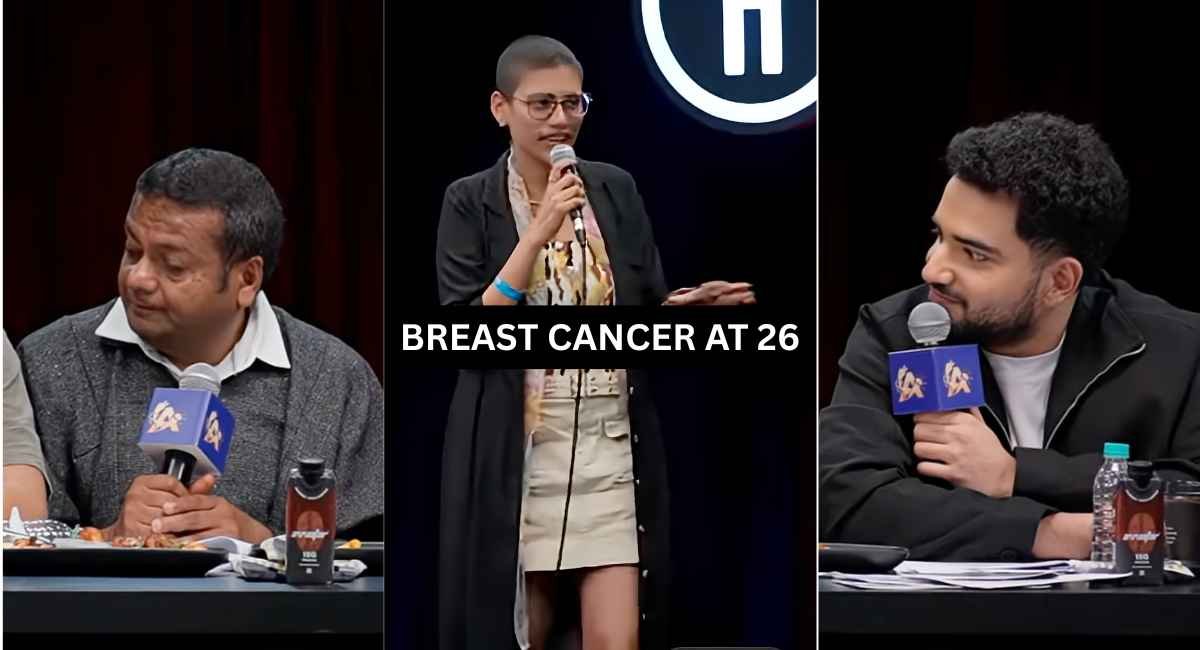
Can Breast Cancer Happen at 26? Karthika’s Story from India’s Got Latent Is a Wake-Up Call
Can breast cancer happen at 26? Karthika’s story from India’s Got Latent highlights why young women should not dismiss persistent breast changes because of their age. Learn about warning signs, diagnosis and when to seek medical advice.
When we hear the words breast cancer, many people instinctively associate the disease with older women. But breast cancer in India is an important health concern that deserves awareness across age groups, including younger women. So, when a young woman in her 20s speaks about being diagnosed with breast cancer, it can come as a shock.
That is exactly why Karthika’s story deserves attention.
Karthika, a contestant associated with India’s Got Latent, spoke publicly about her breast cancer diagnosis. Her story, shared in the context of India’s Got Latent, the show hosted by Samay Raina, has brought attention to an important question about breast cancer among younger women.
Can breast cancer happen at 26?
The answer is yes.
Karthika’s Story: A Diagnosis at a Young Age
Karthika’s openness about her diagnosis has resonated with many people, particularly young women who may believe that cancer is something they do not need to think about yet.
What is especially concerning is the account she shared about consulting a doctor and reportedly being told that cancer could not happen at her age. Hearing this, I went back to the reel several times because I initially thought I had misunderstood what was being said.
Unfortunately, the message being discussed highlights a misconception that needs to be addressed.
Breast cancer is much less common in younger women, but being young does not make it impossible.
Karthika’s courage in speaking openly about her diagnosis deserves genuine appreciation. Sharing such a deeply personal and difficult experience publicly takes immense strength, and her openness may help encourage other young women to take changes in their breasts seriously and seek timely medical advice.
I sincerely wish Karthika strength, healing and a smooth recovery.
Can Breast Cancer Happen at 26?
Yes, breast cancer can occur at 26.
Breast cancer is less common among younger women, but it can still occur. According to the National Cancer Institute, fewer than 5% of breast cancers occur in women younger than 40.
This distinction is important.
Being 26 means that the overall likelihood of breast cancer is lower than it is in older age groups. However, it does not mean that a new breast lump or unusual breast change should automatically be dismissed as harmless.
At the same time, young women should not panic every time they notice a breast change.
Many breast lumps in younger women are benign. Fibroadenomas, cysts and other non-cancerous breast conditions are common.
The appropriate response is neither fear nor dismissal.
It is proper medical evaluation.
Breast Changes You Should Not Ignore
You should consult a qualified doctor if you notice a new or persistent change in your breast, such as:
- A new lump in the breast or underarm
- A thickened or firm area that feels different
- A change in the size or shape of the breast
- Skin dimpling, puckering, redness or swelling
- A change in the appearance or position of the nipple
- Unusual nipple discharge, particularly bloody discharge
- Persistent changes around the nipple or areola
These signs do not necessarily mean breast cancer. Many can have benign causes. However, they should be assessed appropriately rather than ignored.
It is also important to remember that breast cancer does not always cause pain. Waiting for a lump to become painful before consulting a doctor is therefore not a good approach.
Does Every 26-Year-Old Need a Mammogram?
No.
Routine breast cancer screening is different from investigating a symptom.
For younger women, routine mammography is generally not recommended in the same way it is for older age groups. However, if a young woman develops a breast lump or another concerning symptom, a doctor may recommend diagnostic evaluation based on her age, symptoms and examination.
For many younger women, breast ultrasound may be an important part of evaluating a breast lump, although the appropriate investigation depends on the individual situation.
Women with a strong family history of breast or ovarian cancer, known genetic mutations such as BRCA1 or BRCA2, or other significant risk factors may also require an individualised screening plan.
So, the message is not “every young woman needs cancer screening.”
The message is:
Every woman deserves to have a concerning breast change taken seriously.
Why Awareness About Breast Cancer in India Matters
Karthika’s story should not create fear among young women. It should encourage awareness.
One of the challenges surrounding Breast Cancer in India is that breast changes may sometimes be ignored, particularly when a woman believes she is too young to have cancer.
There are two extremes to avoid:
Do not panic over every lump. But do not dismiss every lump because of your age.
If you notice something unusual, persistent or different from what is normal for you, consult a healthcare professional.
Early diagnosis can improve treatment options and outcomes for many cancers. The World Health Organization highlights awareness of breast cancer symptoms, timely clinical evaluation and prompt diagnosis as important components of improving outcomes.
A Message to Young Women
If you are 20, 25, 26 or 30, you do not need to live in fear of breast cancer.
But please do not assume that “I am too young, so it cannot happen to me.”
Know what is normal for your breasts. Pay attention to changes. If you notice something unusual or persistent, get it evaluated.
And if your concern is dismissed solely because of your age while the change continues, seeking another medical opinion is reasonable.
Karthika’s story is not a reason for young women to panic.
It is a reason to be aware.
Her openness about her diagnosis has started an important conversation around breast cancer in younger women. Hopefully, it will encourage more women to listen to their bodies, ask questions and seek timely medical advice when something does not feel right.
To Karthika, wishing you strength, healing and a healthy recovery. Your courage in speaking about your experience is deeply appreciated.
Medical Review
Dr Neelima Kulshrestha
Director – Obstetric & Gynaecology
Cloudnine Hospital, Sector 47, Gurugram
This article is intended for general health awareness and does not replace an individual consultation, examination or diagnosis by a qualified healthcare professional.