








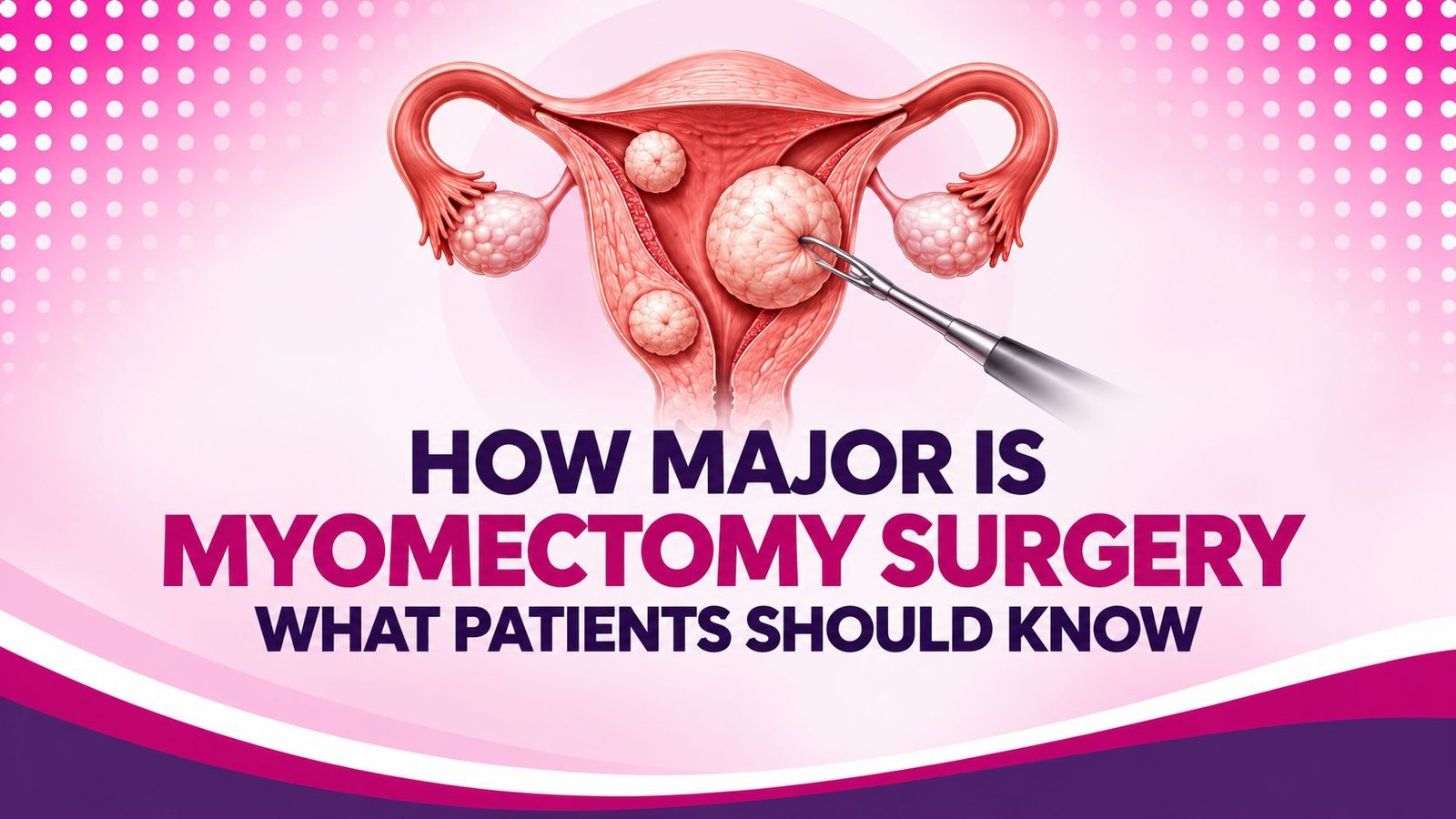
How Major Is Myomectomy Surgery? What Patients Should Know
Myomectomy surgery is a common treatment option for women who have symptomatic uterine fibroids and want to preserve their uterus. Although the procedure is generally considered safe when performed by an experienced gynaecological surgeon, the extent of surgery can vary considerably from one patient to another.
Some myomectomies are minimally invasive and may involve a relatively short recovery period, while others are more complex and require abdominal surgery. The size, number, location, and depth of the fibroids, along with the patient’s symptoms, age, fertility plans, and overall health, all influence how major the surgery may be.
For women considering treatment, understanding what the procedure involves, how it is performed, potential risks, recovery, and fertility considerations can make the decision much clearer.
What Is Myomectomy Surgery?
A myomectomy is a surgical procedure used to remove uterine fibroids while leaving the uterus in place.
Fibroids are non-cancerous growths that develop from the muscular tissue of the uterus. They are common during the reproductive years and may cause symptoms such as:
- Heavy or prolonged menstrual bleeding
- Pelvic pressure or pain
- Painful periods
- Abdominal enlargement or bloating
- Frequent urination
- Constipation or pressure on the bowel
- Pain during sexual intercourse
- Difficulty becoming pregnant in some cases
- Recurrent pregnancy complications in selected patients
Unlike a hysterectomy, which removes the uterus, myomectomy is designed to remove the fibroids while preserving the uterus.
This makes it an important option for women who wish to retain their fertility potential or prefer to keep their uterus for personal or medical reasons.
So, How Major Is Myomectomy Surgery?
The answer is not the same for every patient.
Myomectomy can range from a relatively minor minimally invasive procedure to a more extensive abdominal operation. The perceived “major” nature of the surgery depends primarily on the surgical approach and the complexity of the fibroids.
There are three commonly used approaches:
1. Hysteroscopic Myomectomy
A hysteroscopic myomectomy is performed through the vagina and cervix, without making an incision on the abdomen.
It is generally used for fibroids that project into the uterine cavity, particularly submucosal fibroids.
Because there is no abdominal incision, recovery is usually faster compared with abdominal myomectomy.
Patients may often return to normal activities relatively quickly, depending on the extent of the procedure and individual recovery.
2. Laparoscopic or Robotic Myomectomy
Laparoscopic myomectomy is a minimally invasive procedure performed through small abdominal incisions.
A camera and specialised surgical instruments are used to remove the fibroids.
Potential advantages include:
- Smaller incisions
- Less postoperative discomfort
- Shorter hospital stay in many cases
- Faster return to routine activities
- Smaller scars compared with traditional open surgery
However, minimally invasive surgery is not suitable for every patient.
Very large fibroids, numerous fibroids, difficult fibroid locations, or extensive uterine involvement may make an open procedure more appropriate.
3. Open or Abdominal Myomectomy
An abdominal myomectomy involves a larger incision in the abdomen to access the uterus directly.
It may be recommended when:
- Fibroids are very large
- There are multiple fibroids
- Fibroids are located deep within the uterine muscle
- The uterus is significantly enlarged
- The surgeon needs greater access to reconstruct the uterine wall
Because it involves a larger incision, recovery can take longer than with minimally invasive approaches.
However, an open myomectomy can be the safest and most effective approach for appropriately selected complex cases.
Why Can Myomectomy Be Considered Major Surgery?
Even though fibroids themselves are usually benign, removing them from the uterus is a surgical procedure that requires careful planning.
The uterus contains a substantial blood supply. Depending on the number, size, and location of fibroids, removing them can involve significant surgical dissection and repair of the uterine muscle.
The surgeon may need to:
- Identify the fibroids and their relationship to the uterus.
- Carefully separate the fibroid from surrounding uterine tissue.
- Control bleeding during removal.
- Remove the fibroid completely where appropriate.
- Repair the uterine muscle carefully.
- Preserve as much healthy uterine tissue as possible.
Therefore, the complexity of the operation cannot be determined simply by looking at the size of a fibroid.
What Determines the Complexity of Myomectomy?
Several factors influence whether a myomectomy is relatively straightforward or more complex.
Size of the Fibroids
A small fibroid located near the uterine cavity may be easier to remove than a large fibroid located deep inside the uterine wall.
Number of Fibroids
A woman may have one fibroid or several fibroids. Multiple fibroids can increase the surgical complexity and may influence the recommended surgical approach.
Location of the Fibroids
Fibroids can develop in different areas of the uterus.
Common types include:
- Submucosal fibroids, which grow toward the uterine cavity
- Intramural fibroids, which develop within the muscular wall
- Subserosal fibroids, which grow toward the outer surface of the uterus
The location can affect both symptoms and the type of myomectomy recommended.
Depth Within the Uterine Muscle
Some fibroids may extend deeply into the uterine wall. Removing these fibroids may require careful reconstruction of the muscle layer.
Previous Abdominal or Uterine Surgery
Previous procedures may result in scar tissue or adhesions, which can make surgery more technically challenging.
Fertility Plans
For women planning pregnancy, the surgical technique may need to take future pregnancy into consideration. The location and depth of the fibroid and the extent of uterine reconstruction can be particularly relevant.
Is Myomectomy a Major Surgery Compared With Hysterectomy?
Myomectomy and hysterectomy are different procedures performed for different goals.
A hysterectomy removes the uterus, whereas a myomectomy removes fibroids while preserving the uterus.
For women who wish to become pregnant in the future, preserving the uterus may be an important consideration.
However, preserving the uterus does not automatically mean that myomectomy is a minor procedure. Depending on the fibroid burden and surgical approach, myomectomy can still be a significant operation.
The appropriate treatment should therefore be based on individual medical circumstances rather than comparing the procedures simply as “minor” or “major.”
What Tests Are Usually Done Before Myomectomy?
Before recommending surgery, the gynaecologist generally evaluates the patient’s symptoms, medical history, reproductive goals, and fibroid characteristics.
Depending on the case, evaluation may include:
- Pelvic examination
- Ultrasound
- Detailed pelvic imaging when required
- Blood tests
- Assessment of anaemia
- Pregnancy-related evaluation when appropriate
- Review of previous surgical history
Imaging is particularly important because it helps the surgeon understand the number, size, and location of fibroids and plan the most appropriate surgical approach.
What Happens During Myomectomy Surgery?
The exact procedure depends on the surgical technique.
During surgery, the surgeon identifies the fibroid and separates it from the surrounding uterine tissue. The fibroid is then removed and the uterine wall is repaired when necessary.
In an abdominal or laparoscopic myomectomy, particular attention is paid to controlling bleeding and reconstructing the uterine muscle.
The surgical plan is individualised according to the patient’s anatomy and the characteristics of the fibroids.
What Are the Risks of Myomectomy?
Like any surgery, myomectomy has potential risks.
These may include:
- Bleeding
- Infection
- Formation of adhesions
- Injury to nearby organs
- Need for blood transfusion in some cases
- Anaesthetic complications
- Recurrence of fibroids in the future
- Conversion from minimally invasive surgery to open surgery in selected circumstances
Rarely, unexpected bleeding or other complications may require additional surgical management.
A detailed discussion with the treating gynaecologist before surgery is important so that the patient understands the potential benefits, limitations, and risks.
How Long Does It Take to Recover From Myomectomy?
Recovery depends largely on the surgical approach.
A woman undergoing hysteroscopic myomectomy may recover much faster than someone undergoing an open abdominal myomectomy.
Laparoscopic surgery generally allows a quicker return to routine activities than open surgery, although individual recovery varies.
During recovery, patients may be advised to:
- Take prescribed medications as directed
- Avoid strenuous activity until cleared
- Attend follow-up appointments
- Watch for fever, excessive bleeding, worsening pain, or other concerning symptoms
- Follow specific instructions regarding exercise and sexual activity
The surgeon should provide personalised postoperative instructions based on the type and extent of surgery.
Does Myomectomy Affect Fertility?
For some women, fibroids can interfere with fertility or pregnancy depending on their size and location.
Removing certain fibroids may improve the chances of conception, particularly when a fibroid significantly affects the uterine cavity. However, the effect on fertility varies from patient to patient.
It is important to remember that fertility depends on several factors, including age, ovarian function, fallopian tube health, sperm factors, and other reproductive conditions.
Therefore, myomectomy should not automatically be considered a fertility treatment for every woman with fibroids.
Can Pregnancy Happen After Myomectomy?
Yes, many women become pregnant after myomectomy.
However, the recommended waiting period before attempting pregnancy depends on factors such as the type of surgery, depth of uterine incision, extent of uterine reconstruction, and the surgeon’s assessment.
Women planning pregnancy should discuss their reproductive plans before surgery rather than after the procedure.
In some patients, the way the uterus was repaired may also influence pregnancy and delivery planning.
Can Fibroids Come Back After Myomectomy?
Myomectomy removes existing fibroids, but it does not necessarily prevent new fibroids from developing.
Therefore, some women may develop additional fibroids in the future.
The possibility of recurrence depends on several factors, including age, hormonal influences, the number of fibroids present, and individual biology.
Regular gynaecological follow-up may be recommended depending on the patient’s symptoms and medical history.
When Should You Consider Seeing a Fibroid Specialist?
You may want to discuss your options with a gynaecologist if you experience:
- Very heavy periods
- Persistent pelvic pain
- Pressure or fullness in the lower abdomen
- Unexplained anaemia
- Difficulty conceiving
- Recurrent pregnancy-related concerns
- Rapidly increasing abdominal size
- Fibroids that are large or causing significant symptoms
A specialist evaluation can help determine whether observation, medication, minimally invasive treatment, myomectomy, or another treatment option is appropriate.
Choosing the Right Myomectomy Surgeon
The surgeon’s experience can be particularly important when dealing with large, multiple, or deeply located fibroids.
When evaluating a surgeon, patients may want to consider:
- Experience with different myomectomy techniques
- Experience managing complex fibroid cases
- Understanding of fertility preservation
- Availability of minimally invasive options when appropriate
- Hospital facilities and surgical support
- Clear communication regarding benefits and risks
- Individualised surgical planning
Women looking for the Myomectomy surgeon in Sector 47 Gurgaon should focus not only on online ratings but also on the surgeon’s experience, treatment approach, hospital facilities, and whether the recommended procedure matches their individual condition.
Patients considering treatment at Cloudnine Hospital can also evaluate the experience and surgical expertise of their treating gynaecologist. Those searching for the Myomectomy surgeon in CloudNine Hospital, Gurgaon should have a detailed consultation to understand which surgical approach is appropriate for their specific fibroid condition.
Questions to Ask Your Doctor Before Myomectomy
Before scheduling surgery, consider asking:
- How many fibroids do I have?
- Where are the fibroids located?
- How large are they?
- Do my fibroids explain my symptoms?
- Do I actually need surgery?
- Which type of myomectomy is appropriate for me?
- Can minimally invasive surgery be considered?
- How may the surgery affect future pregnancy?
- How long should I expect recovery to take?
- What are the possible complications?
- Could I require a blood transfusion?
- Is there a possibility that the surgical approach may need to change during the procedure?
- Can fibroids recur after surgery?
- When can I return to work, exercise, and normal activities?
Having these questions answered can help patients make an informed decision rather than feeling overwhelmed by the term “major surgery.”
Final Takeaway
Myomectomy is not automatically a major or minor surgery. Its complexity depends on the fibroids and the surgical approach required to remove them safely. A small submucosal fibroid may be removed through hysteroscopy with relatively quick recovery, while multiple or deeply embedded fibroids may require laparoscopic, robotic, or open abdominal surgery and a longer recovery period.
The most important step is to have a personalised evaluation with an experienced gynaecologist who can assess the fibroids, understand your symptoms and fertility goals, and explain the available treatment options.
If you have been diagnosed with uterine fibroids and are considering surgery, Dr Neelima Kulshrestha can help you understand whether myomectomy is appropriate for your individual condition and what you can expect before, during, and after treatment.