








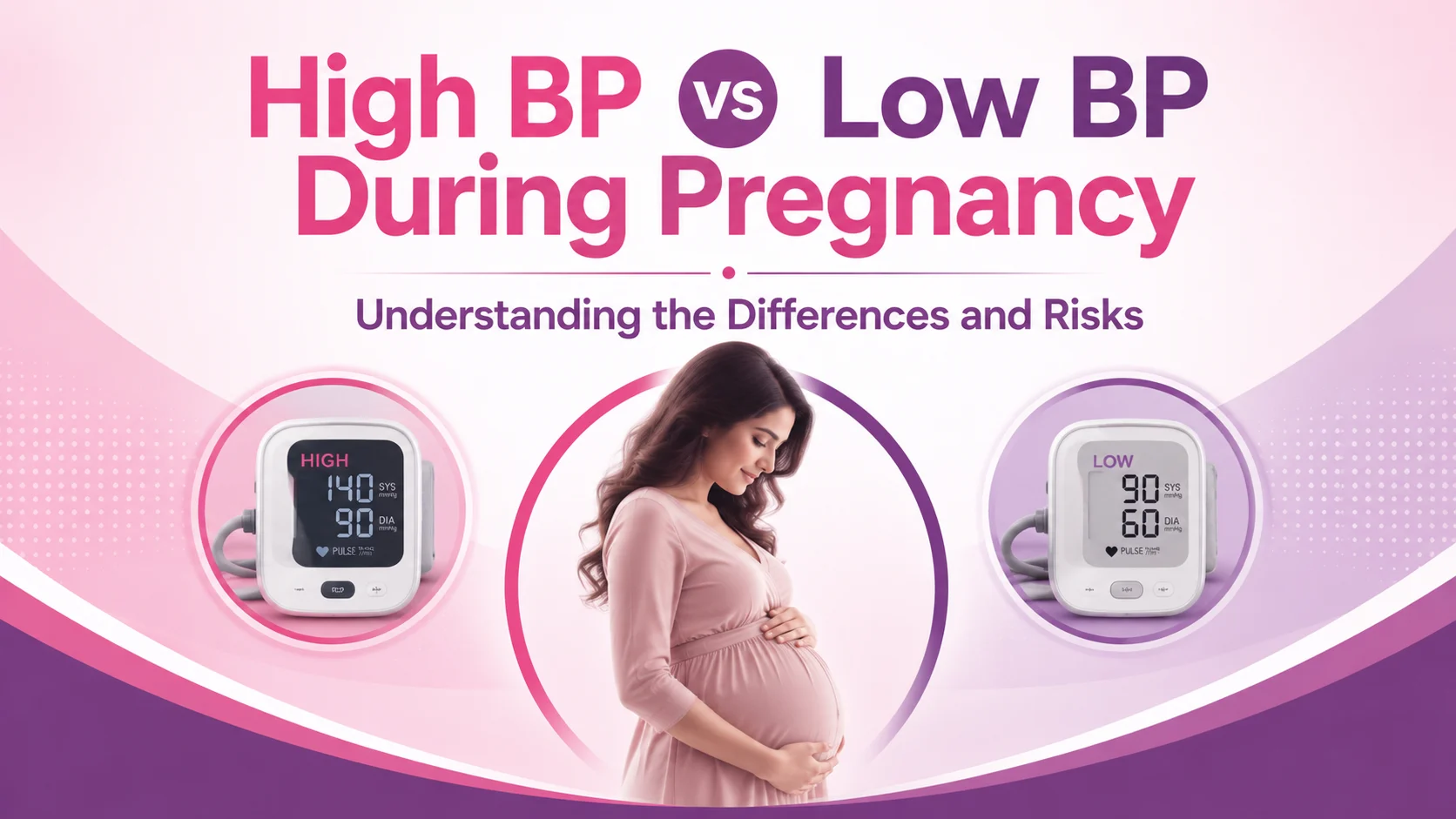
High BP vs Low BP During Pregnancy: Understanding the Differences and Risks
Maintaining healthy BP during pregnancy is essential for the well-being of both the mother and the baby. Blood pressure naturally changes throughout pregnancy, but significant increases or decreases can sometimes lead to complications. Understanding High BP vs Low BP During Pregnancy can help expectant mothers recognize symptoms early and seek timely medical care.
In this blog, we explain the differences between high and low blood pressure during pregnancy, their symptoms, potential risks, and when to consult your doctor.
What Is Normal BP During Pregnancy?
Blood pressure is measured using two numbers: systolic pressure (top number) and diastolic pressure (bottom number). A normal BP during pregnancy is generally around 120/80 mmHg, although slight variations are common.
During the first and second trimesters, blood pressure may naturally decrease due to hormonal changes. However, blood pressure should remain within a healthy range throughout pregnancy.
What Is High BP During Pregnancy?
High blood pressure, also known as hypertension, occurs when blood pressure readings consistently measure 140/90 mmHg or higher.
Types of high blood pressure during pregnancy include:
- Chronic hypertension (present before pregnancy)
- Gestational hypertension (develops after 20 weeks)
- Preeclampsia (high blood pressure with organ involvement)
- Chronic hypertension with superimposed preeclampsia
Symptoms of High BP During Pregnancy
Some women may not experience symptoms. However, possible signs include:
- Severe headaches
- Blurred vision
- Swelling of the face and hands
- Shortness of breath
- Upper abdominal pain
- Sudden weight gain
Risks of High BP During Pregnancy
Uncontrolled high blood pressure can affect maternal and fetal health. Potential complications include:
- Preeclampsia
- Placental abruption
- Preterm delivery
- Restricted fetal growth
- Increased risk of cesarean delivery
Regular monitoring of BP during pregnancy helps detect these complications early.
What Is Low BP During Pregnancy?
Low blood pressure, or hypotension, is generally defined as blood pressure readings below 90/60 mmHg. It is more common during the first and second trimesters due to hormonal changes that cause blood vessels to relax.
Symptoms of Low BP During Pregnancy
Common symptoms include:
- Dizziness
- Lightheadedness
- Fainting episodes
- Fatigue
- Nausea
- Blurred vision
Many women experience mild low blood pressure without serious complications. However, severe hypotension should be evaluated by a healthcare provider.
Risks of Low BP During Pregnancy
In most cases, low blood pressure is less concerning than hypertension. However, severe low blood pressure may lead to:
- Increased risk of falls and injuries
- Reduced blood flow to vital organs
- Maternal weakness and fatigue
Proper hydration and nutrition can often help manage low blood pressure.
High BP vs Low BP During Pregnancy: Key Differences
When comparing High BP vs Low BP During Pregnancy, it is important to understand that both conditions require medical attention, but their risks differ significantly.
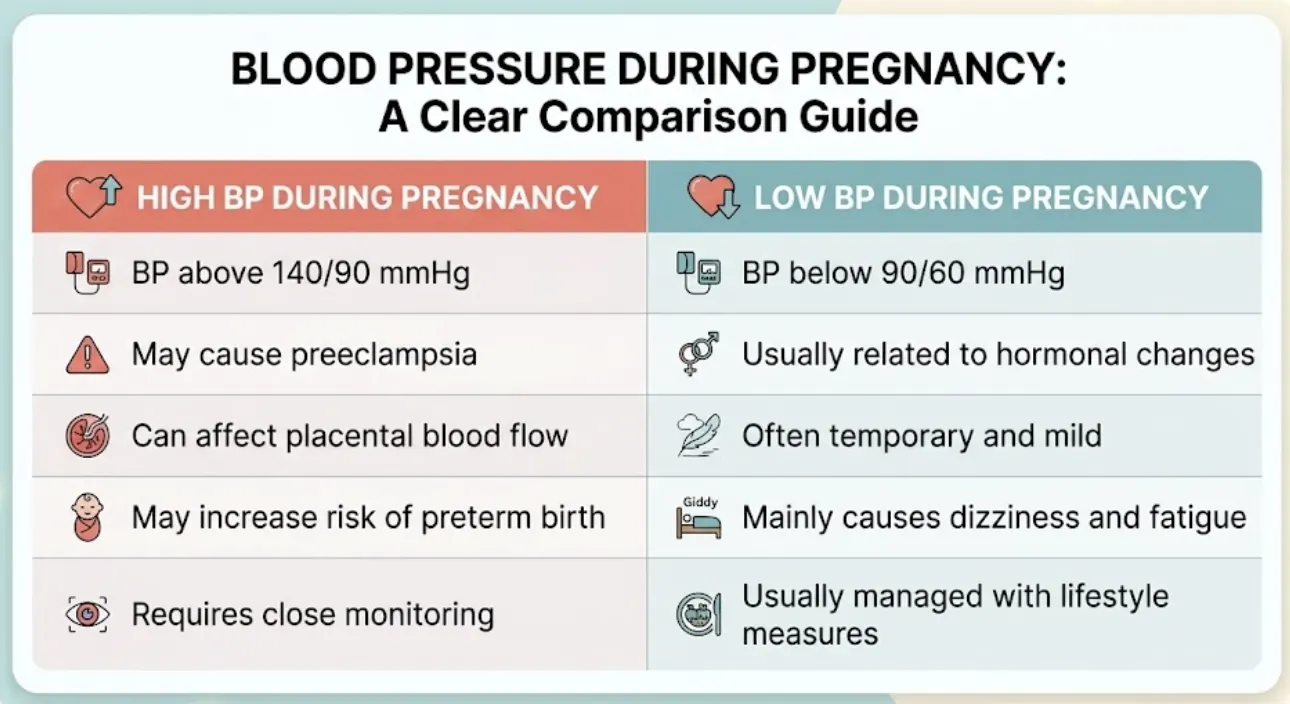
Whether high or low, abnormal BP during pregnancy should always be discussed with your obstetrician.
How to Maintain Healthy BP During Pregnancy
To support healthy blood pressure throughout pregnancy:
- Attend all prenatal appointments
- Stay physically active as advised by your doctor
- Follow a balanced and nutritious diet
- Stay well hydrated
- Get adequate rest and sleep
- Avoid smoking and alcohol
- Monitor blood pressure regularly if recommended
Early detection remains the key to preventing complications related to BP during pregnancy.
Expert Pregnancy Care in Gurgaon
Managing blood pressure during pregnancy requires experienced medical supervision. Dr. Neelima Kulshrestha, MBBS, DNB (Obstetrics & Gynecology), is a highly experienced Obstetrician and Gynecologist with 29 years of expertise in managing routine and high-risk pregnancies.
As Director, Department of Obstetrics & Gynecology at Cloudnine Hospitals, she provides comprehensive pregnancy care with a focus on maternal and fetal well-being. Women seeking a trusted gynecologist in Cloudnine Hospital Gurgaon can benefit from her extensive clinical expertise and personalized approach.
Conclusion
Understanding High BP vs Low BP During Pregnancy is important for every expectant mother. While low blood pressure is often temporary and manageable, high blood pressure can lead to serious pregnancy complications if left untreated. Regular prenatal care, healthy lifestyle habits, and timely medical guidance can help ensure a safer pregnancy for both mother and baby.
If you notice symptoms of abnormal BP during pregnancy, consult your healthcare provider promptly for evaluation and appropriate care.