








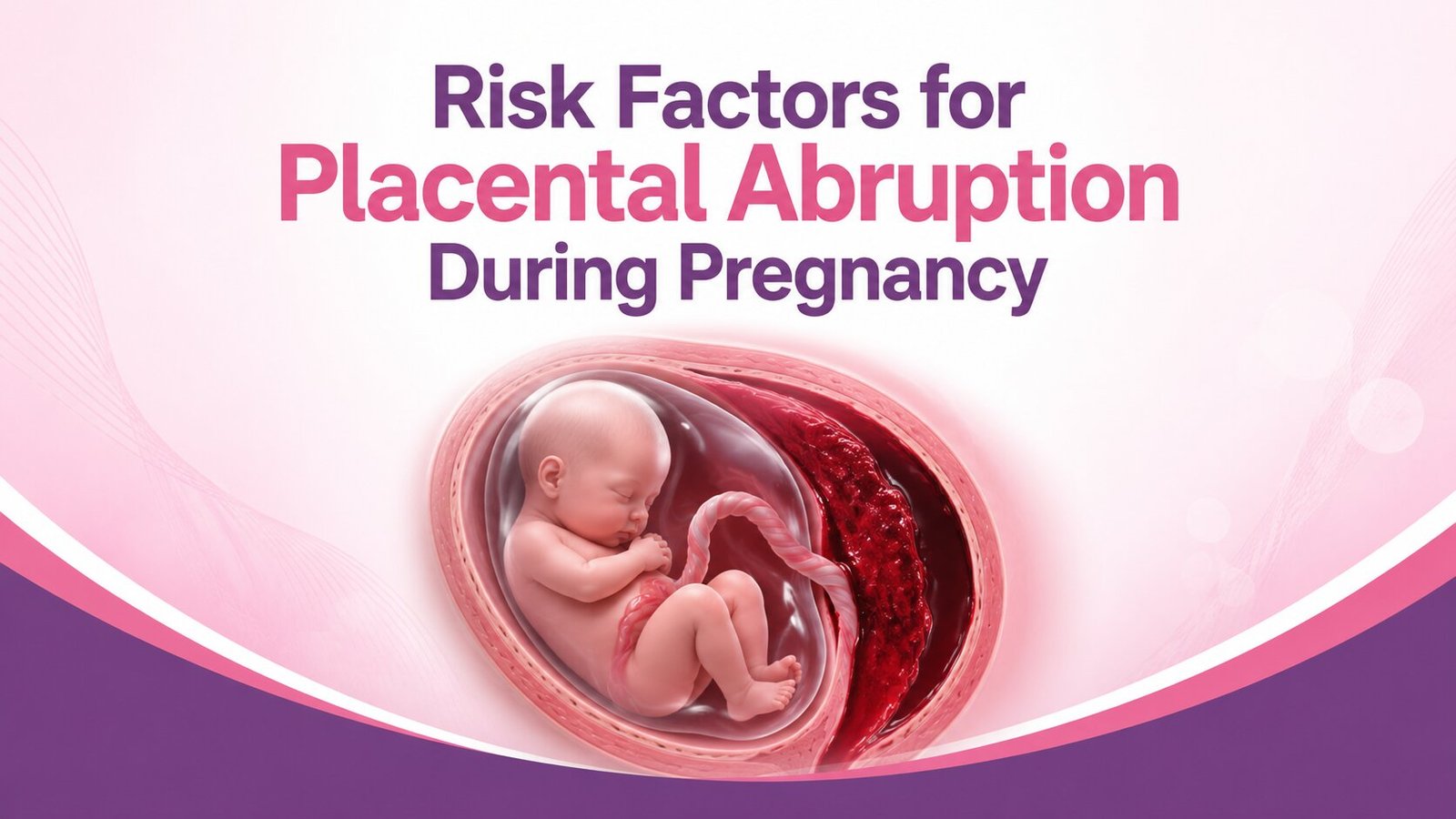
Risk Factors for Placental Abruption During Pregnancy
Pregnancy is a journey filled with excitement and anticipation, but it also requires careful monitoring to ensure the health and safety of both the mother and baby. One serious pregnancy complication that requires immediate medical attention is Placental Abruption. Understanding the risk factors can help expectant mothers recognize warning signs early and seek timely medical care.
What is Placental Abruption?
Placental Abruption occurs when the placenta partially or completely separates from the inner wall of the uterus before delivery. Since the placenta supplies oxygen and nutrients to the growing baby, its premature separation can lead to significant complications for both mother and child.
Although Placental Abruption is relatively uncommon, it is considered a medical emergency and can increase the risk of preterm birth, fetal distress, and severe maternal bleeding.
Risk Factors for Placental Abruption
While Placental Abruption can happen unexpectedly, certain factors can increase the likelihood of developing this condition during pregnancy.
1. High Blood Pressure During Pregnancy
Chronic hypertension and pregnancy-induced hypertension are among the most common risk factors for Placental Abruption. Elevated blood pressure can affect blood vessels in the placenta, increasing the chances of separation from the uterine wall.<
2. Previous Placental Abruption
Women who have experienced Placental Abruption in a previous pregnancy have a higher risk of recurrence in subsequent pregnancies. Such pregnancies require close monitoring by an experienced obstetrician.
3. Trauma or Injury to the Abdomen
A fall, motor vehicle accident, or any direct injury to the abdomen can trigger Placental Abruption. Pregnant women should always seek medical evaluation after any abdominal trauma, even if symptoms appear mild.
4. Smoking and Substance Use
Smoking during pregnancy damages blood vessels and reduces oxygen supply to the placenta. Similarly, cocaine and other illicit drug use significantly increase the risk of Placental Abruptionand other pregnancy complications.
5. Multiple Pregnancy
Women carrying twins, triplets, or higher-order multiples may have an increased risk of Placental Abruption due to greater uterine stretching and pregnancy-related complications.
6. Advanced Maternal Age
Pregnant women above the age of 35 may face a slightly higher risk of developing Placental Abruption compared to younger mothers. Regular prenatal check-ups become especially important in such pregnancies.
7. Premature Rupture of Membranes
When the amniotic sac breaks before labor begins, the risk of Placental Abruption may increase, particularly if there is a significant loss of amniotic fluid.
8. Blood Clotting Disorders
Certain clotting abnormalities can affect blood flow to the placenta and contribute to the development of Placental Abruption. Women with known clotting disorders should receive specialized prenatal care.
Read Also: Recovery after c-section – Week by week
Warning Signs of Placental Abruption
Seek immediate medical attention if you experience:
- Sudden abdominal pain
- Vaginal bleeding
- Back pain
- Uterine tenderness
- requent uterine contractions
- Reduced fetal movements
Prompt diagnosis and treatment can help improve outcomes for both mother and baby.
Can Placental Abruption Be Prevented?
While not all cases of Placental Abruption can be prevented, risk reduction strategies include:
- Maintaining healthy blood pressure levels
- Attending regular prenatal appointments
- Avoiding smoking, alcohol, and illicit drugs
- Following safety precautions to prevent abdominal injuries
- Managing chronic medical conditions under medical supervision
Women with high-risk pregnancies should remain under the care of a qualified obstetrician throughout pregnancy.
Expert Care for High-Risk Pregnancies
If you have concerns about Placental Abruption or other pregnancy complications, consulting an experienced specialist is essential. Dr. Neelima Kulshrestha, MBBS, DNB (Obstetrics & Gynecology), is a highly experienced Obstetrician and Gynecologist with 29 years of expertise in managing routine and high-risk pregnancies.
As Director, Department of Obstetrics & Gynecology at Cloudnine Hospital Gurgaon, she provides comprehensive maternal care with a strong focus on early diagnosis and risk management. Women seeking a trusted gynecologist in Cloudnine Hospital Gurgaon can benefit from her extensive experience and patient-centered approach.
Conclusion
Placental Abruptionis a serious pregnancy complication that requires immediate medical attention. Understanding the risk factors, recognizing warning signs, and maintaining regular prenatal care can significantly improve maternal and fetal outcomes. Early intervention remains the key to ensuring a safer pregnancy and healthy delivery.